The Midlife Runner’s Guide to Bulletproof Joints: Building Durability for the Long Haul
Rethinking Joint Health in Midlife
There is a persistent myth that running is inherently bad for your joints, especially as you cross into your 40s, 50s, and beyond. The truth is quite the opposite. When approached smartly, running actually helps maintain joint health by promoting cartilage conditioning and bone density.
However, running in midlife requires a shift in perspective. The goal evolves from just chasing speed to building “durability”—the physical resilience to handle the impact of everything from a daily 5K to an ultramarathon without breaking down. Taking proactive care of your joints is the ultimate secret to staying on the road and enjoying the runner’s high well into your later decades.
.
Understanding the Machinery: Types of Joints
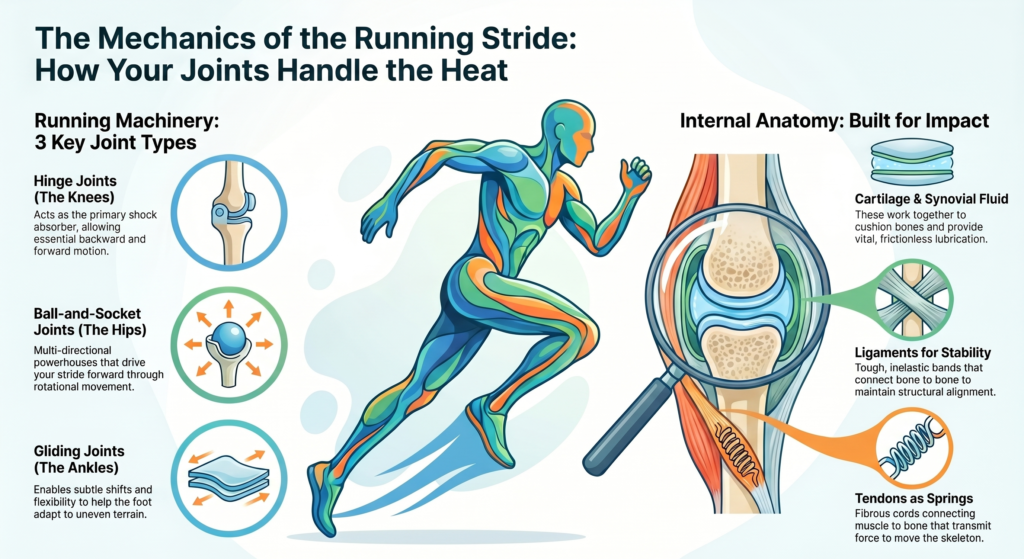
Before protecting our joints, it helps to know how they work mechanically. The human body has several types of synovial (freely moving) joints, but three dictate the biomechanics of our running stride:
While running is a full-body movement, the impact load heavily travels through a specific lower-body kinetic chain. A weakness in one area immediately stresses the others.
Hinge Joints: Operating exactly like a door hinge, these allow backward and forward motion. The knee is the largest hinge joint in the body and the primary shock absorber during a run.
Ball-and-Socket Joints: These offer the widest range of motion, allowing rotational and multi-directional movement. Your hips are the ball-and-socket powerhouses that drive your stride forward.
Gliding Joints: These occur where flat bones glide past one another, offering flexibility and subtle shifts in alignment. The ankles rely on gliding joints to adapt to uneven terrain
A Brief Anatomy of a Joint Structure
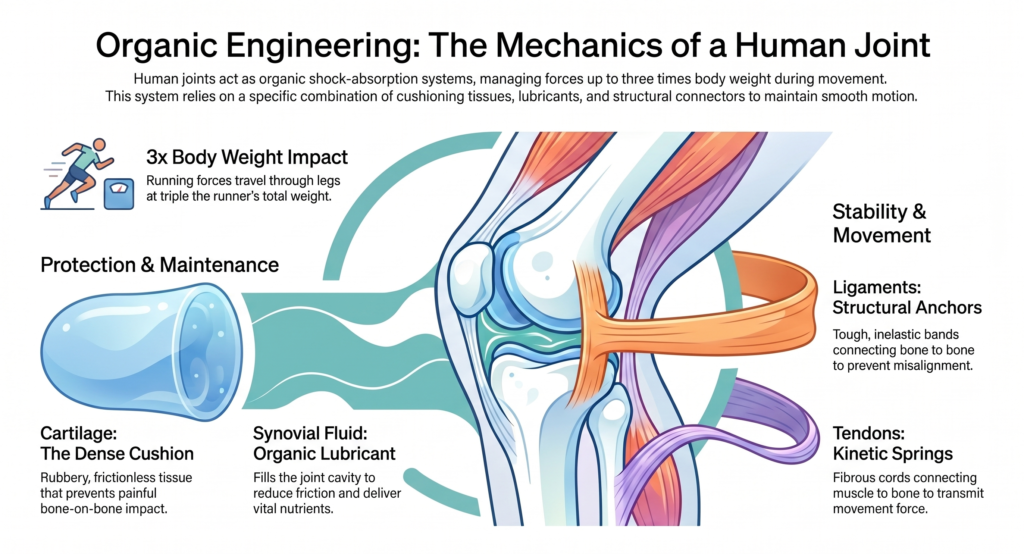
Think of a joint as a highly engineered, organic shock-absorption system. When you run, forces up to three times your body weight travel through your legs. Here is what keeps those strides smooth:
Cartilage: The smooth, rubbery, and frictionless tissue covering the ends of the bones. It acts as a dense cushion, preventing painful bone-on-bone friction during impact.
Synovial Fluid: The body’s natural lubricating oil. It fills the joint cavity to reduce friction and delivers vital nutrients to the cartilage, which lacks its own blood supply.
Ligaments: Tough, inelastic bands of connective tissue that connect bone to bone, providing crucial structural stability and preventing the joint from moving out of alignment.
Tendons: Thick, fibrous cords connecting muscle to bone. They act like springs, transmitting the force generated by your muscles to physically move the skeleton.
The Crucial Joints for Midlife Runners
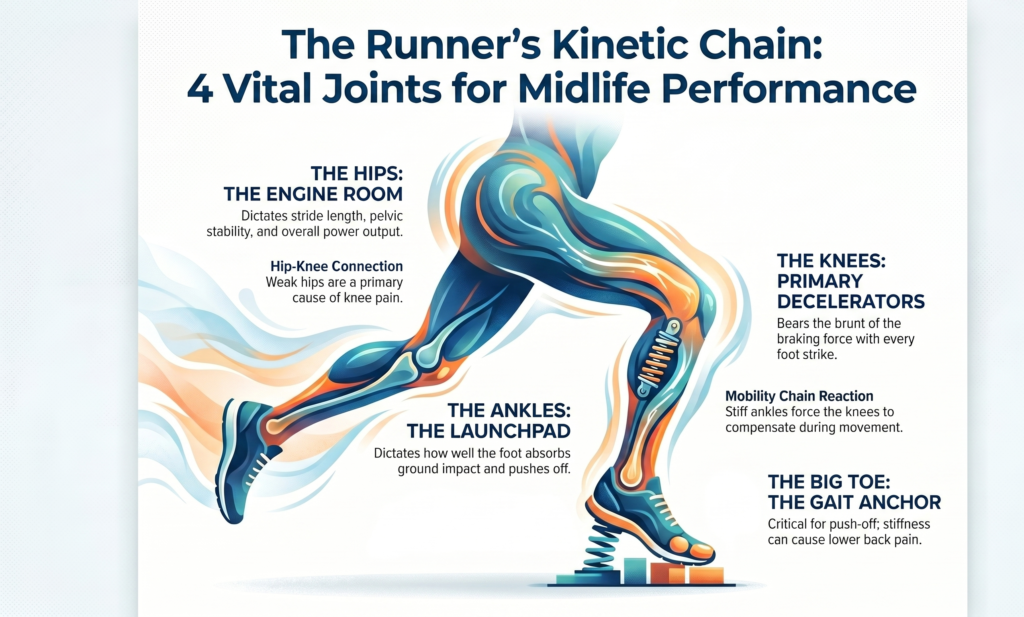
While running is a full-body movement, the impact load heavily travels through a specific lower-body kinetic chain. A weakness in one area immediately stresses the others.
The Knees: The primary decelerators. They bear the brunt of the braking force with every single foot strike.
The Hips: The engine room. The ball-and-socket hip joints dictate your stride length, pelvic stability, and overall power output. Weak hips often lead to knee pain.
The Ankles: The launchpad. Ankle mobility dictates how well your foot absorbs the ground and pushes off. Stiff ankles force the knees to compensate.
The Big Toe (MTP Joint): Often overlooked, but critical. A stiff big toe prevents proper push-off, altering your entire gait and causing a chain reaction of pain all the way up to the lower back.
How to Take Care of Your Joints Daily
Joint care isn’t just about what you do during a training run; it requires a 24/7 lifestyle commitment.
Stay Hydrated: Cartilage is roughly 80% water. Chronic dehydration leads to less synovial fluid production, resulting in stiff, “creaky” joints that are more prone to micro-tears.
Maintain Optimal Weight: Every extra kilogram of body weight equates to about four kilograms of extra force on the knees per step. Staying lean and close to an optimal racing weight significantly reduces the sheer mechanical load on the lower body.
Prioritize Mobility Work: Spend 5-10 minutes daily on dynamic stretches, yoga, or foam rolling. Keeping the surrounding connective tissues pliable prevents them from pulling tightly on the joint structures.
Mind Your Footwear: Rotate two pairs of running shoes and replace them the moment the midsole foam loses its bounce. Fresh foam is your absolute first line of defense against concrete impact.
Preventing Joint Injuries on the Run
njury prevention requires strict discipline and respecting the physiological recovery process.
The 10% Rule (and Beyond): Never increase your weekly mileage by more than 10%. For midlife runners pursuing ambitious targets like a sub-4 hour marathon or a sub-2 hour half marathon, increasing by just 5-7% is often wiser. This allows tendons and ligaments—which adapt much slower than muscles—ample time to catch up to the training load.
Always Warm Up: Never jump straight from a desk chair into a run. Five minutes of dynamic movements (leg swings, reverse lunges, high knees) actively signals the body to release synovial fluid, physically greasing the joints before impact begins.
Cadence Check: A slightly higher cadence (around 170-180 steps per minute) forces a shorter stride. This ensures your foot lands directly under your center of gravity rather than way out in front, drastically reducing the harsh braking force on the knee joints.
The Role of Strength Training: Building Armor for Your Joints
If you want healthy joints, you absolutely must build strong muscles. Strength training is a non-negotiable requirement for the durable midlife runner. Muscles act as the body’s primary, active shock absorbers. When your quads, hamstrings, glutes, and calves are strong, they absorb the repetitive impact of running, sparing the delicate cartilage and ligaments beneath them.
Key Focus Areas: Skip the seated gym machines and focus on unilateral (single-leg) exercises. Bulgarian split squats, single-leg deadlifts, and weighted step-ups perfectly mimic the single-leg balancing act of the running stride. They build functional strength and eliminate the hidden muscle imbalances that pull joints out of alignment.
Nutrition for Joint Health
What you put on your plate directly dictates your body’s ability to manage joint inflammation and repair tissue damage.
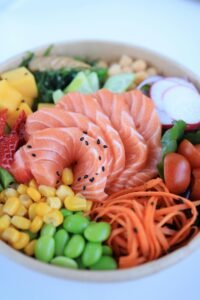
mega-3 Fatty Acids: Found abundantly in wild-caught salmon, chia seeds, and walnuts, Omega-3s are powerful, natural anti-inflammatories that visibly reduce morning joint stiffness.
Vitamin C & Collagen: Vitamin C is essential for the body to synthesize collagen naturally. Collagen is the primary structural protein making up your cartilage and tendons.
Calcium & Vitamin D: These are crucial for maintaining the dense bone structure needed to anchor your tendons and ligaments securely.
Antioxidants: Tart cherry juice, turmeric (curcumin), and dark berries actively combat the oxidative stress and cellular inflammation that accumulate after a heavy, long-distance training block.
Additional Essential Inputs (What You Shouldn't Miss)
Understanding “Good” vs. “Bad” Pain: You must learn the difference between delayed onset muscle soreness (DOMS) and joint pain. DOMS is a dull, generalized ache in the muscle belly that signals adaptation and growth. Sharp, localized, or stabbing pain directly inside a joint or tendon is a massive red flag. Muscle pain means adapt; joint pain means stop immediately.
The Magic of Sleep: Tendons and ligaments have an incredibly poor blood supply, making them notoriously slow to heal. The vast majority of tissue repair, hormone release, and cellular rebuilding happens exclusively during the deepest cycles of sleep. Committing to a consistent 7-9 hours of sleep is the ultimate, free, and most effective joint supplement in existence.