Sensory Durability: Navigating Vision and Hearing Changes for the Midlife Runner
When we talk about running longevity, the conversation usually revolves around knees, Achilles tendons, and VO2 max. But your musculoskeletal system doesn’t operate in the dark. Your body relies entirely on the sensory input it receives to dictate foot placement, balance, and pace.
As we cross into our 40s and 50s, subtle shifts in our vision and hearing are entirely normal, but they directly impact how we move through the world—and how safely we log our miles. Here is why taking care of your eyes and ears is just as critical as foam rolling your calves.

The Impact of Sensory Changes in Midlife
Age-related sensory changes rarely happen overnight. They are gradual shifts that can suddenly make a familiar running route feel a bit more challenging.
Vision Changes on the Run:
- Presbyopia: The hardening of the eye’s lens makes it difficult to focus on close objects. If you find yourself holding your wrist further away just to read your Garmin splits, you are experiencing presbyopia.
- Decreased Depth Perception: Aging affects how well our eyes work together to judge distance. On the road, this is subtle. On a technical trail with roots and rocks, slightly off depth perception drastically increases the risk of tripping or twisting an ankle.
- Increased Glare Sensitivity: The lenses in our eyes become less clear over time, causing light to scatter. This makes the glare from early morning headlights or wet pavement particularly blinding.

Hearing Changes on the Run:
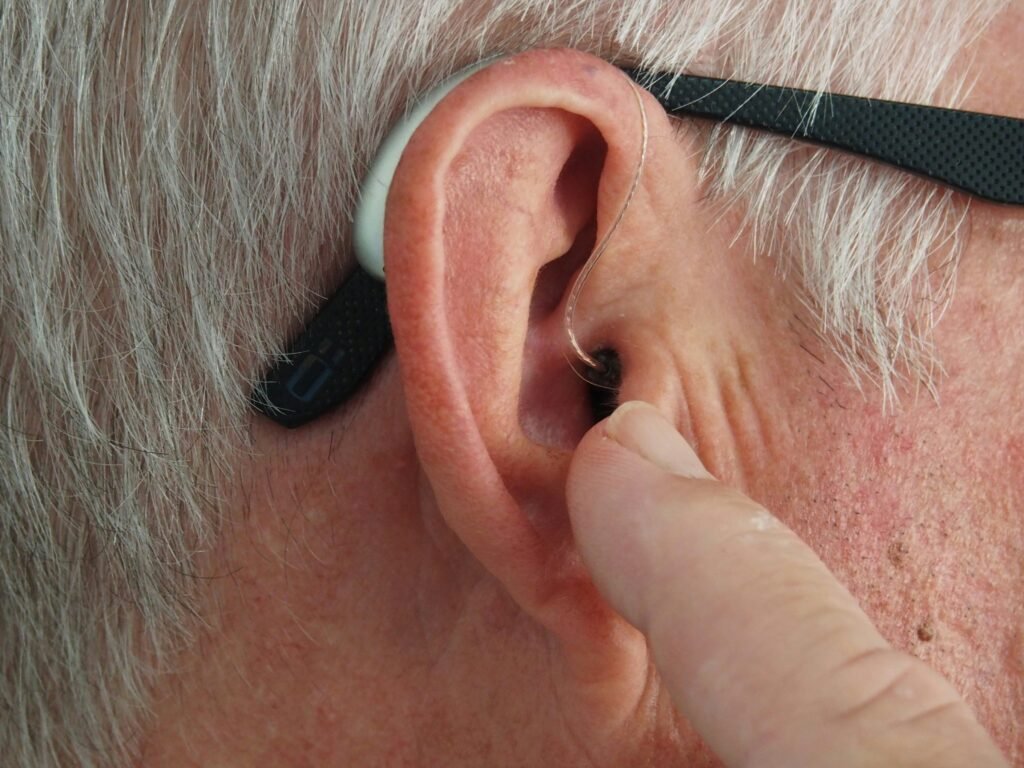
- Presbycusis: Age-related hearing loss typically affects high-frequency sounds first. You might miss the subtle “chirp” of a fellow runner’s watch or the rustle of an animal on a quiet trail.
- Filtering Background Noise: As we age, the brain has a harder time separating specific sounds from a noisy background. Hearing an approaching cyclist while running near a busy highway becomes noticeably harder.
Why Vision and Hearing Dictate Running Durability
Sensory health isn’t just about experiencing your surroundings; it is fundamentally tied to biomechanics and injury prevention.
Proprioception and Balance
Your balance is controlled by a triad: your inner ear, your physical joints (proprioception), and your eyes. When your vision degrades, your brain relies more heavily on the other two. If you are navigating a dark, uneven path with poor vision, your brain essentially forces your body to tense up, shortening your stride and increasing the braking force on your joints to prevent a fall.
Mental Fatigue
Long-distance running is already a massive cognitive load. If your brain is working overtime just to scan the ground for obstacles or strain to hear approaching traffic, you will experience central nervous system fatigue much faster. Sensory clarity preserves mental energy for the miles ahead.
3. How to Protect Your Eyes and Ears as You Age
Just like you cross-train to protect your joints, you can adopt habits to protect your sensory health.
Preserving Your Vision:
- Invest in Quality Running Sunglasses: UV radiation from the sun accelerates the development of cataracts and macular degeneration. Always wear sunglasses with 100% UVA and UVB protection. If you run near water or glaring roads, choose polarized lenses to cut the scattered light.
- Nutritional Defence: The same anti-inflammatory diet that helps your joints helps your eyes. Leafy greens (rich in lutein) and Omega-3 fatty acids help protect the macula—the part of the eye responsible for sharp, central vision.
- The 20-20-20 Rule: If you work at a computer all day before your evening run, give your eyes a break. Every 20 minutes, look at something 20 feet away for 20 seconds to relax the focusing muscles in your eyes.

Preserving Your Hearing:
- Ditch the In-Ear Buds: Blasting music directly into your ear canal damages the delicate hair cells in your inner ear over time. Switch to bone-conduction headphones.
- Manage Blood Pressure: The inner ear is highly sensitive to blood flow. Maintaining cardiovascular health through your running directly helps preserve your hearing by keeping the blood vessels in your ears healthy and pliable.

The Overlooked Element: The Vestibular System
If there is one crucial point most runners miss regarding sensory health, it is the role of the vestibular system located in your inner ear.
This system is the master control centre for your balance and spatial orientation. It is filled with fluid that shifts as your head moves.
- Hydration Matters: Because the vestibular system relies on fluid dynamics, chronic dehydration—a common issue during marathon training—can actually make you feel dizzy or slightly off-balance during a run.
- Use It or Lose It: You can actively train your vestibular system. Incorporating balance drills into your strength routine (like single-leg deadlifts or standing on a Bosu ball with your eyes closed) forces your inner ear and joints to communicate better, keeping your balance sharp even as your vision changes.